Developing Leaders Is a Customer Alignment Strategy
Organizations often think of leadership development as a people initiative.
An HR initiative.
A talent initiative.
But leadership development is also a customer alignment strategy.
Because every customer experience is ultimately influenced by the decisions, behaviors, communication, and capabilities of the leaders inside the organization.
When leaders grow, organizations evolve.
When leaders stagnate, organizations eventually do too.
And when organizations fail to develop leaders despite recognizing capability gaps, they create risk—not only for the business, but for their people and their customers.
Customer Alignment Depends on Leadership Capability
Throughout this series, we’ve explored the importance of customer voice, leadership alignment, execution, talent, and organizational health.
What sits underneath all of it?
Leadership capability.
Customer voice only creates value when leaders know how to:
- Listen effectively
- Interpret what matters most
- Make disciplined decisions
- Communicate priorities clearly
- Lead through change
- Hold accountability consistently
- Translate strategy into execution
Those skills are not automatic.
They must be developed.
The organizations that remain aligned over time are rarely the organizations with the smartest leaders.
They’re the organizations committed to continually developing them.
Ignoring Known Gaps Is a Leadership Decision
Most organizations know where some of their leadership gaps exist.
The challenge is what happens next.
Too often, leaders identify the gap but delay addressing it.
Maybe the individual is technically strong.
Maybe they’re well-liked.
Maybe they’ve been successful in the past.
Maybe there are more pressing priorities.
But every gap left unaddressed has a cost.
The leader feels it.
The team feels it.
And eventually, the customer feels it.
Unclear communication.
Inconsistent decisions.
Poor accountability.
Slow adaptation.
Conflicting priorities.
These are often symptoms of development opportunities that have gone unattended for too long.
Leadership development isn’t about fixing broken people.
It’s about helping capable people continue evolving as the organization evolves around them.
Development Is Not One-Size-Fits-All
One of the biggest mistakes organizations make is assuming all development should happen the same way.
A single training program will not solve every leadership challenge.
Different needs require different approaches.
The most effective organizations intentionally match development solutions to the specific gap they’re trying to address.
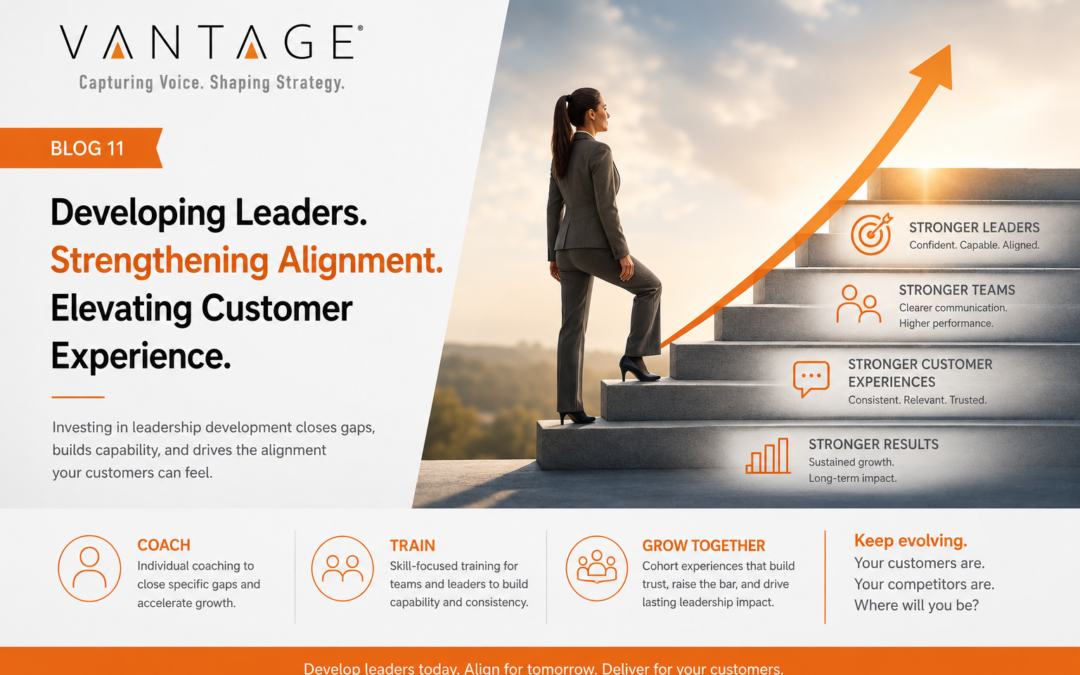
Individual Coaching: Targeted Growth Where It Matters Most
Sometimes the need is highly specific.
A leader may struggle with:
- Executive presence
- Difficult conversations
- Strategic thinking
- Accountability
- Communication
- Decision-making
- Leading through change
In these situations, individual coaching can be one of the most effective tools available.
Coaching creates focused development around the specific behaviors and capabilities that matter most for the individual and the organization.
It allows leaders to address gaps directly, accelerate growth, and build confidence in areas that impact both team performance and customer outcomes.
When done well, coaching creates meaningful change that extends far beyond the individual leader.
Leadership Development Training: Building Shared Skills
Sometimes the gap isn’t isolated to one person.
It exists across a team, department, or organization.
This is where leadership development training becomes powerful.
Skill-based development programs help create:
- Shared language
- Shared expectations
- Shared frameworks
- Consistent leadership practices
Whether the focus is communication, accountability, emotional intelligence, customer-centric leadership, strategic execution, or change management, training helps organizations create alignment around how leaders operate.
When leaders learn together, consistency improves.
And consistency improves customer experience.
Leadership Cohorts: Creating Lasting Change
Some development needs require more than a workshop.
They require time. Practice. Accountability. Trust.
This is where leadership cohorts become especially valuable.
Cohort experiences bring leaders together over an extended period to:
- Learn
- Apply
- Reflect
- Practice
- Hold one another accountable
Over time, these experiences create stronger relationships, deeper trust, and a shared commitment to growth.
The result isn’t just better leadership skills.
It’s stronger leadership culture.
And stronger leadership culture creates stronger organizational alignment.
Development Requires Honest Evaluation
Leadership development is an investment.
But development should never become an excuse for avoiding reality.
One of the hardest truths leaders face is that not every gap can be closed.
Sometimes development creates transformation.
Sometimes coaching unlocks potential.
Sometimes training accelerates growth.
And sometimes, despite support, effort, and opportunity, progress does not happen at the level required.
That reality doesn’t make someone a bad person.
It simply means the role, the business need, or the timing may no longer be aligned.
Knowing When Development Is Enough – and When It Isn’t
Strong organizations do not choose between development and accountability.
They require both.
The goal is not to develop people indefinitely.
The goal is to help people succeed.
That means creating:
- Clear expectations
- Honest feedback
- Appropriate support
- Measurable progress
- Meaningful accountability
When growth is occurring, invest further.
When progress is stalled despite intentional support, leaders must be willing to make difficult decisions.
Sometimes that means moving someone into a role better aligned to their strengths.
Sometimes it means recognizing that the relationship has reached its natural conclusion.
Prolonging inevitable decisions rarely serves the individual, the team, or the customer.
Stagnation Is a Risk Few Organizations Talk About
One of the greatest risks organizations face is not failure.
It’s stagnation.
When leaders stop growing:
- Innovation slows
- Adaptability weakens
- Engagement declines
- Customer needs become harder to anticipate
At the same time, organizations risk losing their strongest people.
High performers want challenge. Growth. Development. Opportunity.
When organizations stop investing in people, people eventually stop investing in the organization.
Some leave. Others stay and slowly become disengaged.
Neither outcome supports long-term success.
The World Is Evolving. Are Your Leaders?
Markets evolve. Customers evolve.Technology and expectations evolve too.
The question is whether leadership capability is evolving alongside them.
Even if we aren’t growing, the world around us still is.
Our competitors are. Our customers are. And eventually, the gap becomes impossible to ignore.
Leadership development is not about keeping up appearances.
It’s about ensuring organizations have the capability required to meet future demands.
Because customer alignment depends on leaders who can hear, interpret, communicate, and execute against changing customer realities.
Leadership Development Is an Investment in the Future
Organizations that consistently outperform don’t wait until leadership problems become performance problems.
They invest early.
They develop intentionally.
They create multiple pathways for growth.
Coaching.
Training.
Cohorts.
Assessment.
Feedback.
Accountability.
Not because development is trendy.
Because leadership capability is one of the most important drivers of customer alignment and organizational performance.
The strongest organizations understand a simple truth:
When leaders grow, organizations grow.
And when organizations grow, customers feel the difference.
Ready to Strengthen Leadership Capability?
Whether the need is targeted coaching, leadership training, cohort development, or broader organizational alignment work, the key is matching the right development approach to the right need.
Because leadership development is not one-size-fits-all.
And customer alignment depends on getting it right.
→ Explore Leadership Development & Organizational Alignment Solutions
#CustomerAlignment #VoiceoftheCustomer #CustomerExperience #LeadershipAlignment #OperatingModel #StrategicExecution #AlignmentDrift #leadershipdevelopment